
Introduction
In today’s fast-paced digital landscape, real-time data processing has become essential for companies that need to make quick decisions at scale.
Netflix, a leader in streaming and data-driven decision-making, handles immense volumes of real-time data every day. To deliver smooth streaming experiences and personalized content recommendations, Netflix’s infrastructure processes massive amounts of streaming data in real time.
Drawing from insights shared on the Netflix Tech Blog, this post explores the fundamentals of real-time data processing, the infrastructure required to support it, and the impact of quick decision-making at scale.
The Need for Real-Time Data Processing
For companies like Netflix, real-time data processing is critical for several reasons:
- User Experience: Real-time data processing ensures that recommendations, content buffering, and user interactions happen instantly, enhancing the viewing experience.
- Operational Insights: Netflix leverages real-time metrics on streaming quality and usage, enabling immediate responses to issues.
- Business Decisions: Data-driven decisions based on live analytics help Netflix stay competitive by rapidly adjusting to user preferences and trends.
In short, real-time data allows Netflix to provide seamless experiences while gaining insights into user behavior at a massive scale.
How Netflix Handles Real-Time Data at Scale
Netflix’s real-time infrastructure is designed to handle the demands of a global audience. Here are key components of Netflix’s real-time data processing setup:
1. Data Ingestion with Apache Kafka
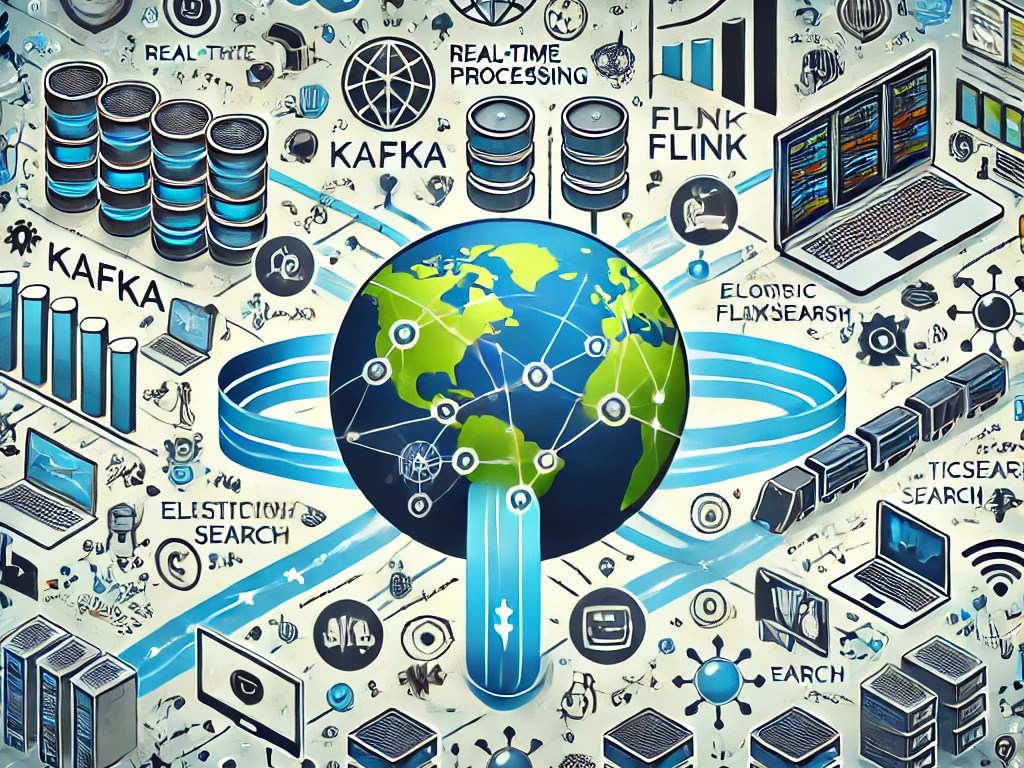
- Apache Kafka is Netflix’s backbone for ingesting data streams from various sources in real time. It is highly scalable, allowing data to flow in from millions of devices simultaneously.
- Kafka enables Netflix to process data from diverse sources such as app interactions, streaming quality metrics, and user feedback.
2. Stream Processing with Apache Flink
- Apache Flink is used to process and analyze the data flowing through Kafka in real time. With Flink, Netflix can handle tasks like calculating metrics, detecting anomalies, and aggregating data for various insights.
- This component of the pipeline is crucial for translating raw data into actionable insights quickly and efficiently.
3. Storage with Apache Cassandra and Elasticsearch
- Real-time data processing requires fast and reliable storage solutions. Netflix uses Apache Cassandra and Elasticsearch for different storage needs:
- Cassandra is optimized for high-volume writes and low-latency reads, making it ideal for storing real-time metrics.
- Elasticsearch powers search and quick data retrieval, especially useful for querying and analyzing real-time data.
4. Data Visualization with Mantis and Kibana
- To make sense of real-time data, Netflix uses tools like Mantis and Kibana for visualization.
- Mantis is a homegrown solution that provides a real-time dashboard of streaming metrics, while Kibana is used for more detailed data visualization and monitoring.
Real-Time Decision Making in Action
The ability to process data in real time helps Netflix in various ways:
- Personalized Content Recommendations: Real-time processing enables Netflix to analyze a user’s interactions and adjust recommendations instantly.
- Enhanced Video Quality Management: With real-time metrics, Netflix can identify streaming quality issues and respond quickly to optimize playback, even in areas with variable internet speeds.
- Proactive Issue Detection: Netflix uses real-time anomaly detection to spot potential issues, ensuring that the platform runs smoothly and preventing larger outages.
Challenges of Real-Time Data Processing
Handling real-time data at Netflix’s scale comes with challenges:
- Data Volume and Velocity: Processing terabytes of data in real time requires robust infrastructure to handle peak loads.
- Data Consistency: Maintaining consistent data across multiple distributed systems is a challenge, especially when data is continuously flowing.
- System Reliability: High uptime and low latency are essential, as any delay or outage directly impacts user experience.
Conclusion
Real-time data processing allows companies like Netflix to stay competitive by providing quick, data-driven responses to user interactions.
By leveraging a sophisticated data infrastructure, Netflix can make instantaneous decisions that enhance the user experience, monitor streaming quality, and provide personalized recommendations.
The lessons from Netflix’s approach to real-time data processing can serve as a guide for any organization aiming to build scalable, responsive data systems.

 Product Data & Everything